• Skip to main content
  • Skip to footer

SOHMA Integrative Medicine

We offer the best of Eastern & Western medicine without using drugs or surgery

  • Tai Chi
    • Tai Chi Benefits
    • Tai Chi Instructors
    • Online Tai Chi Certification Program
  • Physical Medicine
    • Chiropractic Care
      • VA Authorized Care
      • Sports Medicine
      • Digital X-Rays
    • Physiotherapy
    • Spinal Decompression
    • Laser Therapy
    • Shockwave Therapy/Piezowave
    • Cupping Therapy
    • Acupuncture
    • Herbal Pharmacy
    • VA Authorized Care
  • Blogs
  • About
    • Our Providers
  • Contact Us
    • Make an Appointment
    • New Patient Intake Forms

SOHMA Interactive Medicine

What Are the Side Effects of Spinal Decompression?

April 30, 2022 by Dr. Daniel Hoover

Back pain may be treated by spinal decompression with little to no side effects.

Non-surgical Spinal Decompression can help with many pains and aches you may be suffering due to diseases or sitting for long periods of time, as your spine is being compressed by gravity. 

We have gone over if non-surgical Spinal Decompression is good for your spine, but perhaps you are wondering if there are any side effects to non-surgical Spinal Decompression. If there are, then what are they?

Today we’re going to cover what you should expect after Spinal Decompression therapy as well as any side effects you may be worried about.

How is Spinal Decompression Performed?

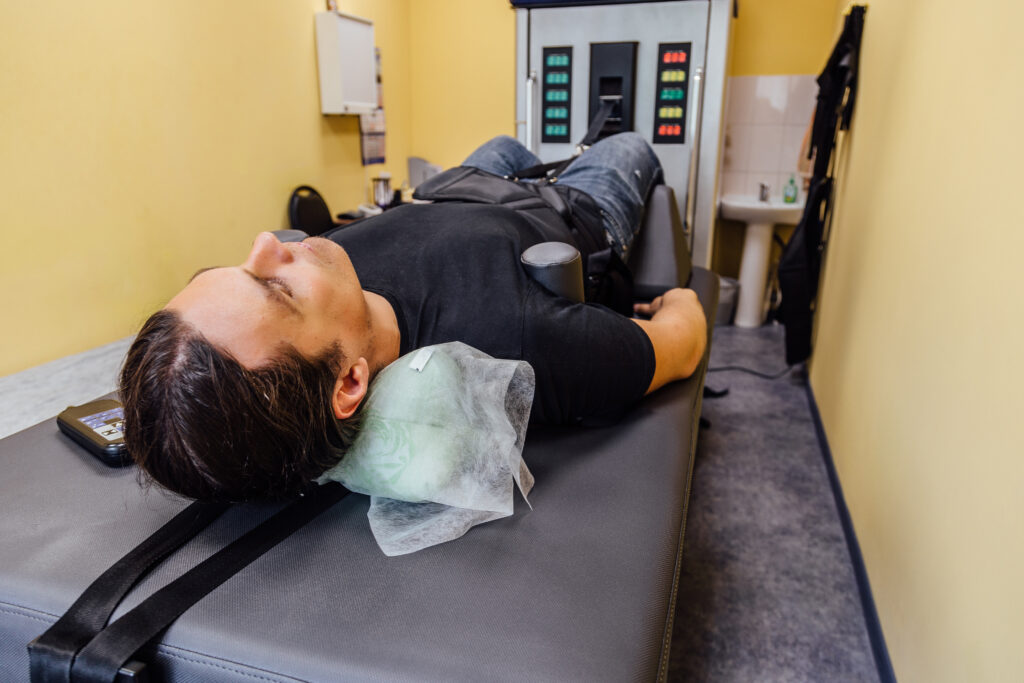
We should first start by answering how this therapy is performed. The patient is set up on a specialized decompression table called a spinal traction. The patient is then gently stretched in intervals according to each individual patient’s treatment. During the treatment the patient is fully dressed and takes only about 30 to 45 minutes.

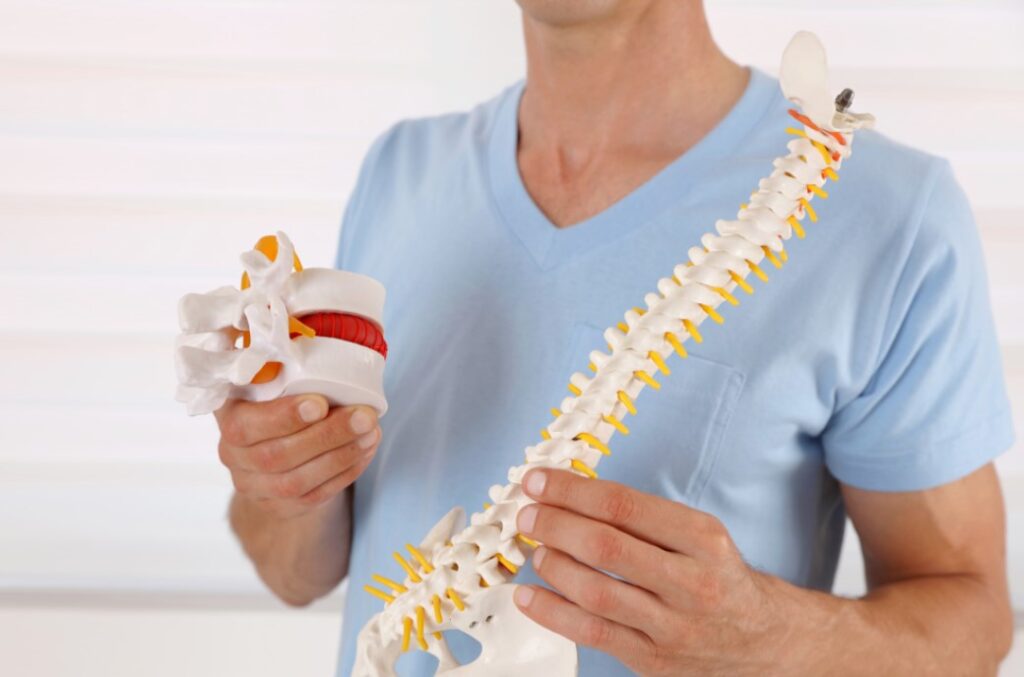
This therapy has been shown to be an effective treatment that brings relief to patients with a wide variety of neck and back problems. The decompression pressure from the spinal traction may retract disc bulges and disc protrusions. Which can reduce pressure from nearby nerves and encourage blood flow. Increased blood flow brings oxygen with it which promotes healing.

What are the Side Effects?

With any treatment, therapy or procedure there are bound to be some side effects regardless of how minimally invasive it is, however the majority of patients do not experience any serious side effects from non-surgical Spinal Decompression. 

The most common side effects would be dull aches for the first couple weeks as the body adjusts to the decompression. Spinal Decompression stretches the back muscles in a direction that they are not accustomed to. This may leave some patients feeling the same type of soreness one would feel after a particularly hard day at  the gym.

On rare occasions Spinal Decompression can cause muscle spasms, or pain going down the patient’s arms and legs. 

Is Spinal Decompression for Me?

As an alternative to spinal decompression surgery, this non-invasive therapy is quite alluring. Although there is no significant recovery time from non-surgical Spinal Decompression some patients may require 4 to 6 weeks for treatment to be complete before they experience lasting relief which can be too slow for some people. 

Non-surgical Spinal Decompression therapy has been gaining popularity quickly. Many physical benefits like increased mobility, improved joint flexibility and general pain reduction have been well documented. Other benefits of choosing non-surgical Spinal Decompression over something invasive include removing the risk of having post surgery infections. Patients are not required to take any additional medication or painkillers. Once treatment is completed, non-surgical Spinal Decompression provides lasting natural pain relief whereas painkillers only reduce pain while it is active in your body. When compared to surgery, this treatment is  safer, faster and requires no downtime compared to post surgery recovery times. 

As safe as non-surgical Spinal Decompression is, there are some people who should ask their primary care provider before deciding to receive Spinal Decompression therapy these include:

  • Pregnant Woman
  • Patients with degeneration of the spine
  • Patients with severe osteoporosis
  • Patients with surgical implants (screws, rods, plates etc.)
  • Patients with severe nerve damage
  • Patients who have had spinal fusion surgery
  • Patients with tumors
  • Patients with spinal fractures.

To avoid as many risks as possible the patient may be asked to undergo screening tests to rule out any of the conditions listed above. Feel free to ask the staff at SOHMA of Long Beach CA if you have any questions or concerns regarding Spinal Decompression.

Take the Next Step In Improving Your Health by Contacting SOHMA Integrative Medicine

Our goal is to help you improve your health. You can reach out to us and ask us about the Myers Cocktail, IV Therapy, Chiropractic care, or how our other health service lines can help you with your journey to improved health. 

Located in Long Beach, CA we help individuals from the surrounding cities.

We look forward to helping you take the next step in your journey to better health
Filed Under: Therapy Tagged With: rehabilitation, SOHMA Interactive Medicine, SOHMA Interactive Medicine Pain, SOHMA Long Beach, Spinal Decompression

How is Spinal Decompression Done?

April 22, 2022 by Dr. Daniel Hoover

spinal decompression

There are two forms of Spinal Decompression. Surgical and non-surgical, but let’s steer away from any surgical procedures that may leave you bedridden for weeks, and focus more on the non surgical Spinal Decompression which can bring relief to patients without the need of invasive surgeries and long recovery times.

You may have some questions about how the procedure is done. You may also be wondering about what causes spinal compression. Today we’ll be going over some of those questions, and why you should consider non-surgical Spinal Decompression before attempting surgery. Join us as we give you an overview on how and why non-surgical Spinal Decompression is done.

What Causes Spinal Compression?


Spinal compression can be caused by a number of conditions and is caused when excess pressure is put on the spinal cord. Compression can occur through the back, bother cervical spine (neck) and lumbar spine (lower back). Naturally wear and tear of the bones of the spine is the most common cause of spinal compression. Usually you’ll begin to see this develop after 50 years old. The other conditions that can cause compression include:

  • Scoliosis
  • Injury
  • Tumor
  • Arthritis
  • Infection
  • Diseases
  • Posture

Depending on the location and cause of the compression, the symptoms can vary. They can develop suddenly with no warning, or gradually. In severe cases however, emergency surgery may be necessary. 

Spinal Compression Symptoms

As mentioned previously symptoms have no pattern of when they occur. Being vigilant about symptoms can lead to swift treatment and quicker recoveries. Some of the symptoms are:

  • Trouble with Coordination
  • Loss of sensation in the feet
  • Numbness
  • Cramping
  • Weakness in Limbs (arms, hands, legs)
  • Burning pain in arms, thighs, or legs
  • Stiffness in Neck, and Back
  • Pain in Neck, and Back

Symptoms that would require immediate medical attention include loss of control of bowels or bladder. Severe pain and weakness spreading to your leg or both legs causing difficulty walking or standing and extreme numbness between legs, and inner thighs. As these symptoms are known as Cauda Equina Syndrome. 

How is the Decompression Done?

Spinal Decompression is when you slowly and gently pull at either side of the spine in order to release any pressure that may have been built up within the spine. At SOHMA of Long Beach we perform non-surgical Spinal Decompression by securing the patient to a specialized decompression table called a spinal traction. You are fitted with a harness to hold your abdomen and your pelvis. The spinal traction is the ability to stretch and relax intermittently to achieve the right amount of tension for desirable results. When the spine is being decompressed, vertebrae can naturally reposition to their original state. 

The procedure lasts around 30 to 45 minutes, compared to spinal surgery that can take weeks or months to heal. Depending on the severity of the case, some patients may need over 20 decompression sessions. Though you feel more flexible, and notice significantly less pain in your neck and back. 

Other benefits you may notice from non-surgical Spinal Decompression include increased spinal mobility, improved balance which can help prevent new injuries and reduced stress level as some of the pressure has quite literally been lifted.

With non-surgical Spinal Decompression most patients don’t notice or experience major side effects. Most common side effects have been reported to cause a dull soreness for the first few days as the body becomes used to being decompressed.

Take the Next Step In Improving Your Health by Contacting SOHMA Integrative Medicine

Our goal is to help you improve your health. You can reach out to us and ask us about the Myers Cocktail, IV Therapy, Chiropractic care, or how our other health service lines can help you with your journey to improved health. 

Located in Long Beach, CA we help individuals from the surrounding cities.

We look forward to helping you take the next step in your journey to better health

Filed Under: Therapy Tagged With: SOHMA Interactive Medicine, SOHMA Interactive Medicine Pain, SOHMA Long Beach, Spinal Decompression

Peripheral Neuropathy and Your Heart

April 18, 2022 by Dr. Daniel Hoover

Peripheral Neuropathy is common, with about 25% to 30% of Americans will be affected by it at some point in their lives. Older adults ages 60+ however,  are at an increased risk. Most symptoms of Peripheral Neuropathy may diminish or go away on its own, but in some cases the damage can be permanent. 

Today we’re going to analyze the link between your heart and peripheral neuropathy.

Understanding Peripheral Neuropathy

Peripheral Neuropathy can develop when the nerves in your limbs, hands and feet become damaged. Symptoms can vary depending on the nerves being affected. Such as sensory nerves that carry messages from your five senses. Motor nerves which carry signals from your brain to your muscles in order to walk for example. The final group of nerves that can be affected by Peripheral Neuropathy are the Autonomic nerves. These are responsible for body functions that you don’t have direct control over like breathing, digestion, heart rate and blood pressure, sweating, and even bladder and bowel control.

When your Autonomic nerves begin to suffer from neuropathy it is called autonomic neuropathy. There are many diseases and conditions that can lead to autonomic neuropathy, as well as side effects of medicine. 

Cardiac autonomic neuropathy is the least understood complication of Peripheral Neuropathy. Due to its potential of being fatal, it’s important to ask your primary care provider for a proper diagnosis.

 Primary diseases that can cause autonomic neuropathy include:

  • Parkinson’s Syndrome
  • Shy-Drager Syndrome
  • Riley-Day Syndrome

Other examples of causes of autonomic neuropathy can include:

  • Amyloidosis
  • Diabetes
  • HIV
  • Chemotherapy
  • Trauma
  • Alcoholism
  • Drug abuse

Your Heart and Peripheral Neuropathy

We don’t need to go into detail about the functions of your heart or how important it is to your health and well being. But Peripheral Neuropathy can affect and damage different nerves. Some of the nerve damage can block or interfere with signals between the heart and blood vessels which can lead to serious symptoms like:

  • Palpitations
  • Hypertension
  • Irregular Heartbeat
  • Blurred Vision
  • Lightheadedness
  • Fainting
  • Shortness of Breath
  • Chest Pain

Because of the varied symptoms, oftentimes this form of neuropathy can be misdiagnosed, making it more difficult to treat and study.

Managing your Symptoms

With many conditions, learning to manage your symptoms is important in order to recover and heal. Peripheral neuropathy is no different. 

Drinking a cup of water first thing in the morning, even before getting out of bed can help regulate blood pressure and may improve orthostatic intolerance, a condition involving symptoms associated when standing but improve when lying down.

Reduce the number of large meals that can lower your blood pressure during digestion. Instead have more frequent but smaller meals throughout the day.

Reduce consumption of sodas, energy drinks, coffee or other heavily caffeinated drinks as they may increase production of urine and reduce blood volume.

Exercise is a great way to increase blood volume and physical function. You can exercise wherever you feel comfortable whether it be a gym, at home or a local park. Ideal exercises include swimming, yoga, Tai Chi or other low impact exercises that won’t cause orthostatic stress.

Along with leading a proactive lifestyle to help with your condition, you should also avoid the following:

  • Alcohol 
  • Extremely Hot Environments
  • Smoking
  • Standing Quickly from a Lying Position

Don’t forget to take the appropriate steps to prevent, control and recover from Peripheral Neuropathy. At SOHMA Integrative Medicine in Long Beach CA we now offer regenerative cellular tissue therapy, which may be covered by Medicare. By administering HCTPs (Human Cellular Tissue Products) in affected areas, the body may be able to repair nerve damage.

Take the Next Step In Improving Your Health by Contacting SOHMA Integrative Medicine

Our goal is to help you improve your health. You can reach out to us and ask us about the Myers Cocktail, IV Therapy, Chiropractic care, or how our other health service lines can help you with your journey to improved health. 

Located in Long Beach, CA we help individuals from the surrounding cities.

We look forward to helping you take the next step in your journey to better health
Filed Under: Therapy Tagged With: peripheral neuropathy, SOHMA Interactive Medicine, SOHMA Interactive Medicine Pain, SOHMA Long Beach

Can You do Your Own Spinal Decompression at Home?

April 7, 2022 by Dr. Daniel Hoover

Most of our waking hours are spent standing or sitting vertically. This means that your spine is regularly working against the force of gravity in order to keep posture upright. This pressure puts constant strain on your spine and causes it to become compressed. The compression on the vertebrae can put pressure on our spinal cord and its associated muscles. Which can cause discomfort and pain.

Today we’ll go over what spinal decompression is and if you should attempt to decompress your spine at home.

What is Spinal Decompression?

Spinal decompression is a non-surgical procedure that is used to relieve pressure that may be accumulated on the spinal cord. Including pressure that may be compressing nerve roots passing through or exiting from the spinal column. Ideally we would recommend coming into SOHMA of Long Beach CA where we offer Non-Surgical Spinal Decompression using a specialized decompression table called a spinal traction. You are fitted with a harness around your pelvis and abdomen. The Spinal Traction table is used to take pressure off of your spinal cord and vertebrae. It can also reposition those vertebrae naturally. For optimal benefits some patients may require as many as a couple months of treatment.

Can you decompress at home?

Of course there are ways to do spinal decompression at home, though your results may vary. There are exercises and stretches that you can do which work on the concept of spinal decompression to help give your lower back some relief. At SOHMA we recommend consulting with a healthcare professional before beginning any at home exercise routine. If these exercises and stretches are not suitable for you they may end up causing more pain.

At Home Spinal Decompression Stretches

There are many stretches that can be used to decompress your spine, below are 3 examples of simple stretches that can be done at home without the need of special equipment.

Overhead Stretches

A very simple exercise that can be done by most people. 

  1. Stand on even ground with your legs at shoulder’s length apart.
  2. Reach both of your arms over your head and interlock your fingers and straighten your elbows.
  3. While holding this position pretend to reach up and touch the sky.
  4. Hold for 10 to 30 seconds, determined by your comfort level.

Do this as needed throughout the day.

Child Pose

This stretch has provided many people lower back pain relief but it is more advanced. This will be performed on the floor so we recommend a yoga mat to make it more comfortable, though it is not necessary.

  1. Go onto your hands and knees to begin this stretch.
  2. Keep going down until your glutes touch your feet while on your knees.
  3. Bend over at your hips and reach forward with your hands on the floor.
  4. Based on your comfort levels, hold this position for 10 to 30 seconds.
  5. Repeat after a minute of rest between stretches.

The further forward you reach with your hands while stretching the more decompression you will feel.

Using Your Bed or Couch

You can use the edge of your bed or the hand rest of your couch to decompress your lower back.

  1. Using an additional pillow for extra comfort, lay it flat on your bed or couch. Making sure your knees are slightly off the ground.
  2. Your weight should be on your toes in order to relax your back and core muscles.
  3. Tuck your chin towards your chest and straighten your arms at the elbow.
  4. Reach forward with your hands and hold onto the surface of the couch or bed and try to pull yourself forward.
  5. Hold this position for 10 to 30 seconds depending on your comfort levels.
  6. After resting for a minute try to reach further than you did previously.

You’re going to feel a great stretch into your upper back that makes its way down to your tailbone. Also due to your position, you will feel a stretch from your hip to your knees.

There are many other factors that go into decompressing your spine. If you feel that the stretches are not relieving enough pain. You may require the use of a Spinal Traction table for Non-Surgical Spinal Decompression.

Take the Next Step In Improving Your Health by Contacting SOHMA Integrative Medicine

Our goal is to help you improve your health. You can reach out to us and ask us about the Myers Cocktail, IV Therapy, Chiropractic care, or how our other health service lines can help you with your journey to improved health. 

Located in Long Beach, CA we help individuals from the surrounding cities.

We look forward to helping you take the next step in your journey to better health.

Filed Under: Therapy Tagged With: sohma, SOHMA Interactive Medicine, SOHMA Long Beach, Spinal Decompression

Cupping Therapy and How it Can Help with Back and Neck Pain

March 31, 2022 by Dr. Daniel Hoover

With athletes and celebrities popularizing Cupping Therapy in the mainstream, many people are beginning to ask more about what Cupping Therapy is and whether it can help them with their physical or mental problems. 

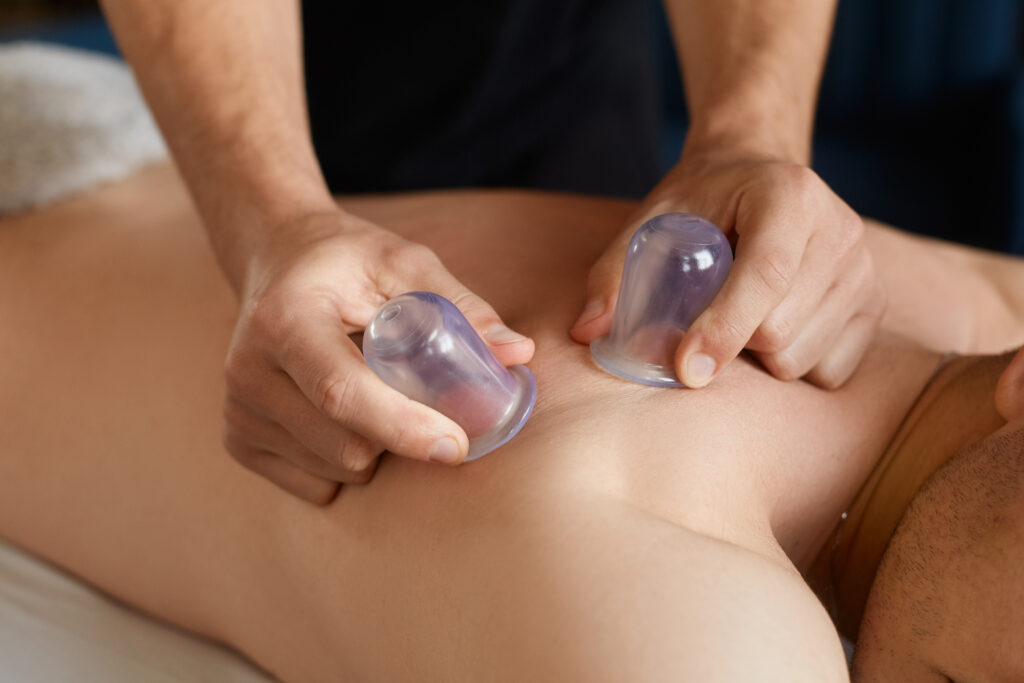
Cupping Therapy is a traditional Chinese medicine that has been around for thousands of years. In the west it is seen as a form of alternative medicine in which a cup is placed on the skin and air is pumped out of it. This will cause the soft tissue to get sucked into the cup, stretching the skin, muscle and fascia. Promoting circulation and aiding the recovery process.

You may be wondering how this is beneficial? Today we are going to talk about how this process helps with back pain and neck pain.

Increased Blood Circulation

Many people may not understand how important proper blood circulation is when it comes to recovery. As we need good circulation to remove toxins from our body and sometimes the organs designated to do this job need a little bit of help. Through no fault of our own sometimes our lifestyle will burden the lymphatic system just by living in a big city. Where we are constantly being exposed to smoke, chemicals and heavy metals.

When the soft tissue is being pulled and stretched into the cup the body will respond by increasing blood circulation to the area being treated. The sudden increase in flow will flush out stagnated toxins and attract immune cells. The increase in oxygenated blood can help with cell repair and help form new connective tissues. An additional benefit is the reduction of inflammation which can help with pain management and cut down the time needed for a natural recovery.

Neck Pain

Many people suffer from neck pain, and for most neck pain is mild and often goes away on its own or with simple treatments. For those with chronic neck pain however, you may need something more than just “taking it easy”. 

Neck pain can be caused by a number of reasons, some more serious than others these include:

  • Poor Sleeping Position
  • Whiplash
  • Extended Periods of Time Arching Your Neck
  • Grinding/Gritting Your Teeth
  • Poor Posture
  • Repetitive Motion
  • Muscle Strain

As previously stated, Cupping causes vasodilation which increases flow of blood to the area that is being treated. When the soft tissues become stretched it loosens muscle knots relaxing the neck. The reduction in swelling due to the increased circulation makes Cupping Therapy an effective form of reducing chronic neck pain. 

Back Pain

Much like neck pains, back pain can be caused by a variety of reasons. Most common being Muscle strains and sprains. Back pain caused by sitting for extended periods of time has become more common in recent times.Due to the difference in size it is more common to injure your back doing everyday things like picking up your child. Or in some cases coughing or sneezing. 

Back pain may take longer to heal depending on the severity of the injury. Cupping Therapy is usually done as often as twice per week. Though depending on the color of the mark left by the cup, treatment may be adjusted.

Cupping Therapy can be used to treat pain, reduce scar tissue in muscles, and reduce swelling and muscle knots. We are here to aid you in recovering the natural way. Cupping Therapy is only one of many treatments we offer.

Take the Next Step In Improving Your Health by Contacting SOHMA Integrative Medicine

Our goal is to help you improve your health. You can reach out to us and ask us about the Myers Cocktail, IV Therapy, Chiropractic care, or how our other health service lines can help you with your journey to improved health. 

Located in Long Beach, CA we help individuals from the surrounding cities.

We look forward to helping you take the next step in your journey to better health.

Filed Under: Cupping Therapy Tagged With: Cupping Therapy, sohma, SOHMA Interactive Medicine, SOHMA Long Beach

  • « Go to Previous Page
  • Page 1
  • Interim pages omitted …
  • Page 11
  • Page 12
  • Page 13
  • Page 14
  • Page 15
  • Interim pages omitted …
  • Page 20
  • Go to Next Page »

Footer

Contact Us

SOHMA Integrative Medicine – Long Beach

Email
drdanielhoover@sohma.org

Follow Us on Instagram Instagram


WCAG

The Web Content Accessibility Guidelines (WCAG) defines requirements for designers and developers to improve accessibility for people with disabilities for websites, such as for SOHMA Integrative Health Center. It defines three levels of conformance: Level A, Level AA, and Level AAA. SOHMA is partially conformant with WCAG 2.1 level AA. Partially conformant means that some parts of the content do not fully conform to the accessibility standard.

Our goal here at SOHMA is to make our website accessible to all visitors; unfortunately, our goal for 100% accessibility is not yet complete. Our goal is to provide universal access to our website by following WCAG 2.0 (current WCAG 2.1) A, AA guidelines; however, this will be a work in progress.

Feedback

We welcome your feedback on the accessibility of SOHMA’s website. Please let us know if you encounter accessibility barriers on our website. We are here to help. You can reach us below at:

Phone: (562) 420-2112
E-mail: accessibility@sohma.org
Postal address: 4195 N. Viking Way, Long Beach, CA 90808
We try to respond to feedback within 5 business days.

SOHMA Integrative Medicine

Connect With Us

VA Authorized

SOHMA Integrative Medicine | Privacy Policy | Copyright © 2026

Designed by ITSOPRO